
Nonfiction Presenters
More presenters will be confirmed in the days and weeks ahead.
Stefan Merrill Block
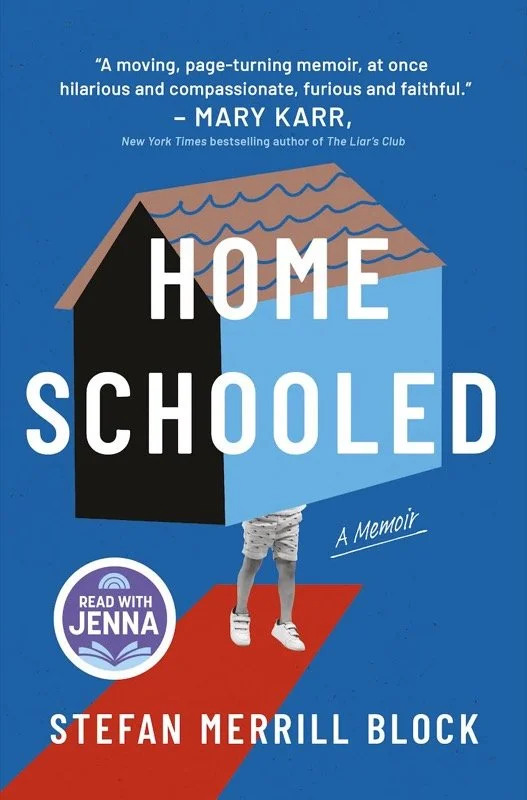
Stefan Merrill Block is the author of The New York Times bestselling memoir Homeschooled, which was a Read with Jenna Book Club Pick. His first book, The Story of Forgetting, was an international bestseller and the winner of Best First Fiction at the Rome International Festival of Literature, The Ovid Prize from the Romanian Writers’ Union, the 2008 Merck Serono Literature Prize, and the 2009 Fiction Award from The Writers’ League of Texas. Stefan's novels have been translated into ten languages, and his stories and essays have appeared in The New York Times, The New Yorker Page-Turner, The Guardian, NPR’s Radiolab, GRANTA, The Los Angeles Times, and elsewhere. He grew up in Plano, Texas, and lives in upstate New York.
-
Stefan Merrill Block was nine when his mother pulled him from school, certain that his teachers were “stifling his creativity.” Hungry for more time with her boy who was growing up too quickly, she began to instruct Stefan in the family’s living room. Beyond his formal lessons in math, however, Stefan was largely left to his own devices and his mother’s erratic whims, such as her project to recapture her twelve-year-old son's early years by bleaching his hair and putting him on a crawling regimen.
In this “stunning debut memoir” (Jenna Bush Hager, The Today Show), Block beautifully reflects on his experiences in both traditional and at-home education systems, delving into:The inception of the homeschooling movement and its massive rise throughout America
Early memories of Block’s mother, and a poignant look into their dysfunctional mother-son story
Block’s reentry into the public school system, both jarring yet insightful, and the bullying he withstood
His emotional journey towards forgiveness, love, and hope as he becomes a parent himself
At once a novelistic portrait of mother and son, and an illuminating window into an overlooked corner of the American education system, Homeschooled is a moving, funny and ultimately inspiring story of a son’s battle for a life of his own choosing, and the wages of a mother’s insatiable love.
Mark Braude

Mark Braude is the author of The Typewriter & The Guillotine, Kiki Man Ray, The Invisible Emperor, and Making Monte Carlo. He has been a Postdoctoral Fellow at Stanford University, a Visiting Fellow at the American Library in Paris, and a National Endowment for the Humanities Public Scholar. He lives in Vancouver with his wife and their two daughters.
-
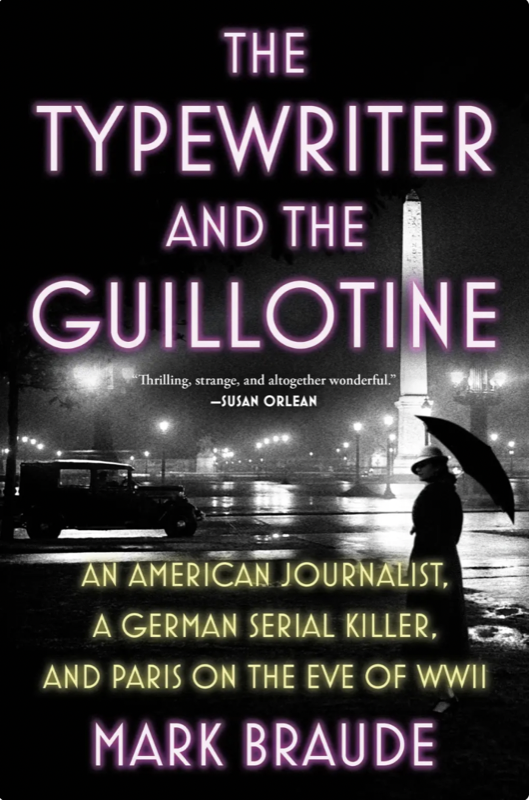
In 1925, the Indianapolis-born Janet Flanner took an assignment to write a regular ‘Letter from Paris’ for a lighthearted humor magazine called The New Yorker. She’d come to Paris to with dreams of writing about “Beauty with a Capital B.” Her employer, self-consciously apolitical, sought only breezy reports on French art and culture. But as she woke to the frightening signs of rising extremism, economic turmoil, and widespread discontent in Europe, Flanner ignored her editor’s directives, reinventing herself, her assignment, and The New Yorker in the process.
While working tirelessly to alert American readers to the dangers of the Third Reich, Flanner became gripped by the disturbing crimes of a man who embodied all of the darkness she was being forced to confront. Eugen Weidmann, a German con-man and murderer, and the last man to be publicly executed in France—mere weeks before the outbreak of WWII. Flanner covered his crimes, capture, and highly politicized trial, seeing the case as a metaphor for understanding the tumultuous years through which she’d just passed and to prepare herself for the dangers to come.
The Typewriter and The Guillotine offers the personal and professional coming-of-age story of an indomitable journalist set against a glamorous, high-stakes backdrop—a tightly-coiled drama full of romance and intrigue.
Craig Fehrman

Craig Fehrman is a journalist and historian who spent five years writing and researching This Vast Enterprise. His first book, Author in Chief, was described by Thomas Mallon in The Wall Street Journal as “one of the best books on the American presidency to appear in recent years.” Fehrman lives in Indiana with his wife and children.
-
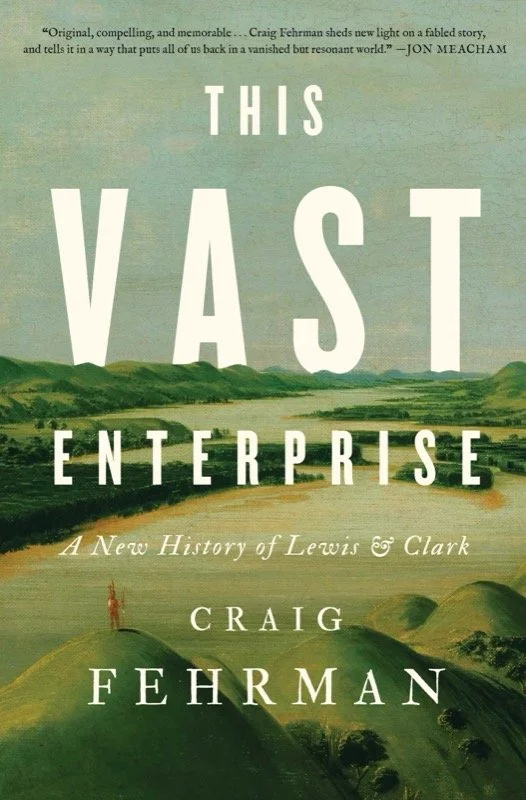
In 1806, when Meriwether Lewis and William Clark return from their journey—having led the Corps of Discovery across eight thousand miles of rapids, mountains, forests, and ravines—they bring an incredible tale starring themselves as courageous explorers, skilled survivalists, underrated scientists, and peaceful ambassadors. While there is truth in those descriptions, there is also distortion.
From one of the most exciting new historians to emerge in the past decade, This Vast Enterprise offers a novel take on the expedition: a gripping narrative that draws on lost documents, stunning analysis, and Native perspectives. Craig Fehrman spent five years visiting more than thirty archives, interviewing more than a hundred sources, and collecting oral history passed down over centuries. He came to see that the success of Lewis and Clark depended on much more than just Lewis and Clark. We all know Sacajawea, and some of us know York, the Black man Clark enslaved. But here we meet John Ordway, a working-class soldier who fought grizzlies and towed the captains’ hulking barge. We hear from Wolf Calf, a Blackfoot teenager who watched his friend die in a battle with Lewis and his men.
Each chapter moves to a different person’s point of view, describing their desires and contradictions. We see Thomas Jefferson operating in an age of bitter partisan unrest—his secret political maneuvers to fund the expedition, revealed here for the first time, are a case study in presidential power. We witness the strategy and strength of Black Buffalo, completely upending our understanding of Lakota-American diplomacy. York, in his chapters, finds ways to wield power and make choices in an era that didn’t allow him much of either. Clark is not a folksy Kentuckian but a student of the Enlightenment. (Fehrman discovered his college notebook; no previous biographer even realized that he went to college.) Lewis is someone willing to sacrifice everything for his country and his mentor, Jefferson.
In the end, the captains are men who needed help—from Sacajawea, from the Corps, and from each other. Mile after mile, the expedition pushes on through hailstorms and flash floods, frostbite and infections, rattlesnakes and rabid wolves, with the Spanish cavalry in fierce pursuit. Fehrman balances the story’s adventure with the humanity of its protagonists. The result is a thrilling reminder that even the most familiar moments in history can still surprise us.
Isaac Fitzgerald

Photo Credit: Nader Farzan
Isaac Fitzgerald is The New York Times bestselling author of Dirtbag, Massachusetts (winner of the New England Book Award). He is also the author of the bestselling children’s book How to Be a Pirate, as well as the co-author of Pen & Ink: Tattoos and the Stories Behind Them and Knives & Ink: Chefs and the Stories Behind Their Tattoos (winner of an IACP Award). He appears frequently on The Today Show, and his writing has appeared in The New York Times, The Atlantic, Esquire, GQ, The Guardian, The Best American Nonrequired Reading, and numerous other publications. He lives with his wife and their two dogs on the North Fork of Long Island.
-
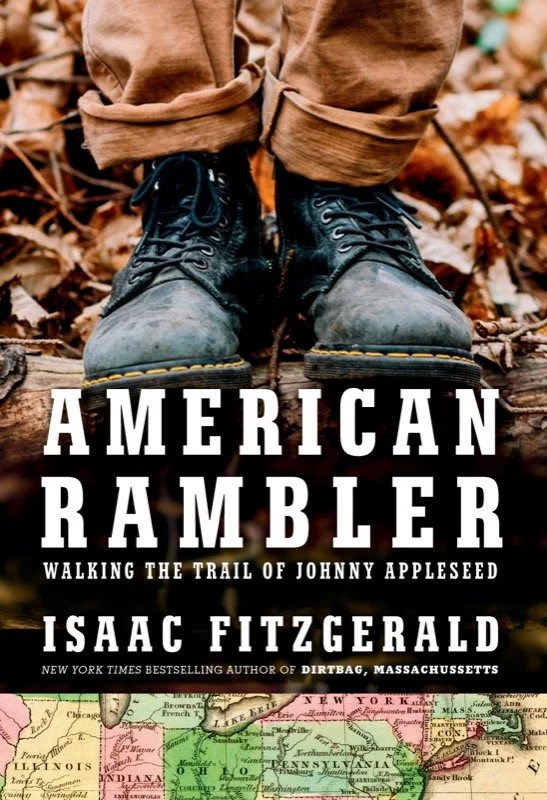
As a child, Isaac Fitzgerald was captivated by Johnny Appleseed, drawn to the legend by family ties, his father’s larger-than-life stories, and a shared restlessness to leave home and discover what lay beyond.
In American Rambler, he sets out on a year-long journey to follow Appleseed’s path, walking (okay, sometimes driving, and at one point, even floating downstream) from Massachusetts to Indiana. On this journey, Fitzgerald turns a childhood fascination into a profound reckoning of loss and grief, ritual and faith, grimy gas station bathrooms and scenic apple picking. He is followed by a mysterious creature, camps in hostile environments, trespasses more than once, and is warmed by the generosity of strangers at every turn.
A moving blend of memoir, history, and travelogue, American Rambler is at once an ode to the American heartland, a meditation on escaping the breakneck pace of modern life, and a clear-eyed look at the myths—often violent, sometimes hopeful, frequently romanticized—at the very core of American identity and history.
Heather Hansman
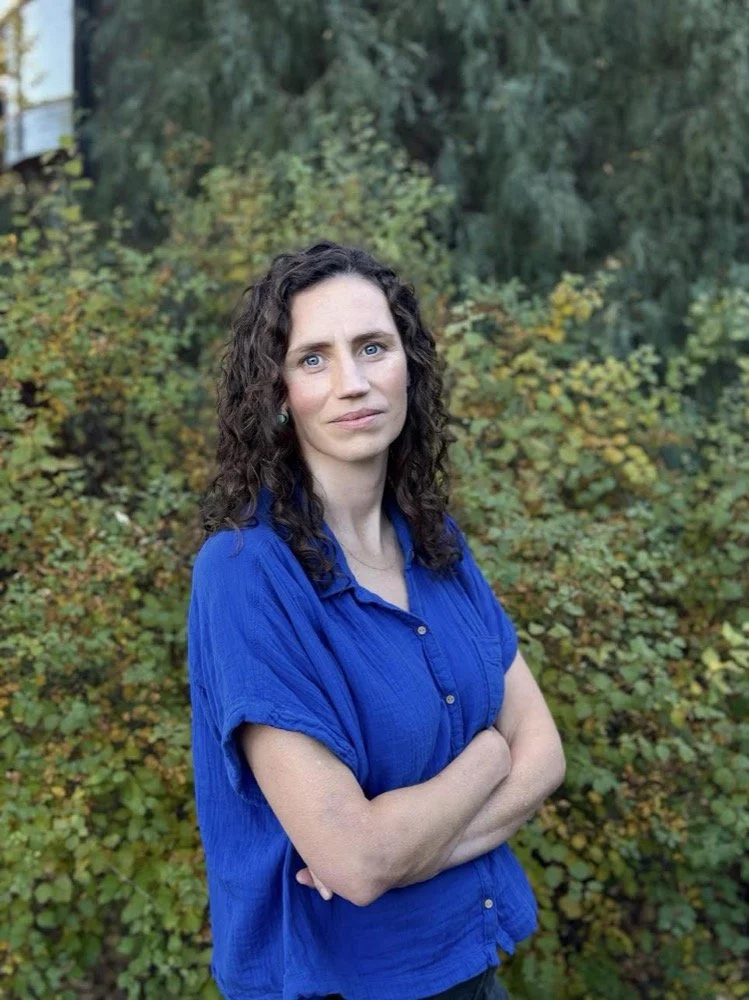
Heather Hansman is an award-winning freelance writer and the celebrated author of Powder Days: Ski Bums, Ski Towns and the Future of Chasing Snow and Downriver: Into the Future of Water in the West. Her work has appeared in The New York Times, The Atlantic, and Outside, among others. She lives in Durango, Colorado, right by the river.
-
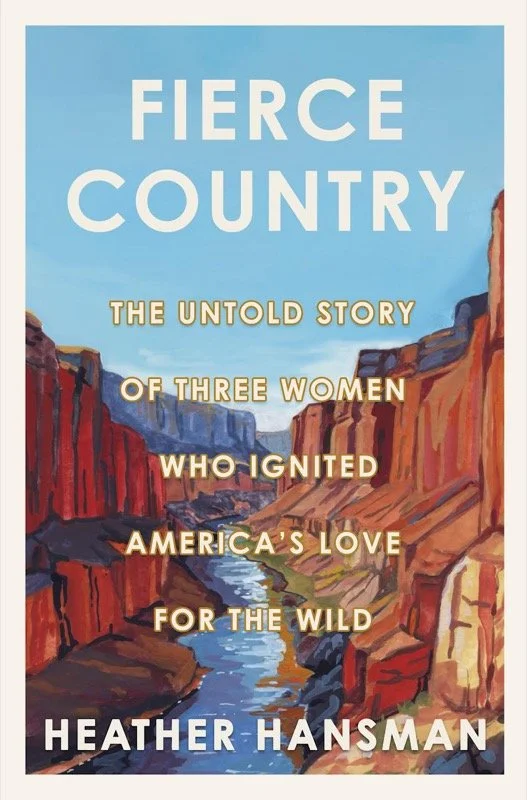
The inspiring, untold story of three incredible women who spearheaded recreation, conservation and resilience in America’s most beloved landscapes, for readers of Pam Houston and David Grann.
Throughout the 20th century Georgie White, Anne LaBastille, and Dolores LaChapelle did more to inspire our love of the great outdoors than just about anyone.Georgie devoted her life to the Grand Canyon, kickstarting the river running craze in the 40s and igniting the recreation industry
Anne, a wilderness guide and bestselling author, protected endangered species and predicted the impacts of climate change from her isolated, off-grid cabin in the Adirondacks.
And deep powder skier Dolores developed an environmental philosophy that shaped everything from the radical environmental movement of the ‘70s to modern conservation ethics.
Now, for the first time, outdoor journalist and bestselling author of Powder Days Heather Hansman goes deep into multiple rugged American landscapes to bring three fascinating lives to the forefront of the outdoor movement, affirming their rightful place in the larger story of an evolving American wild.
Katie Holten
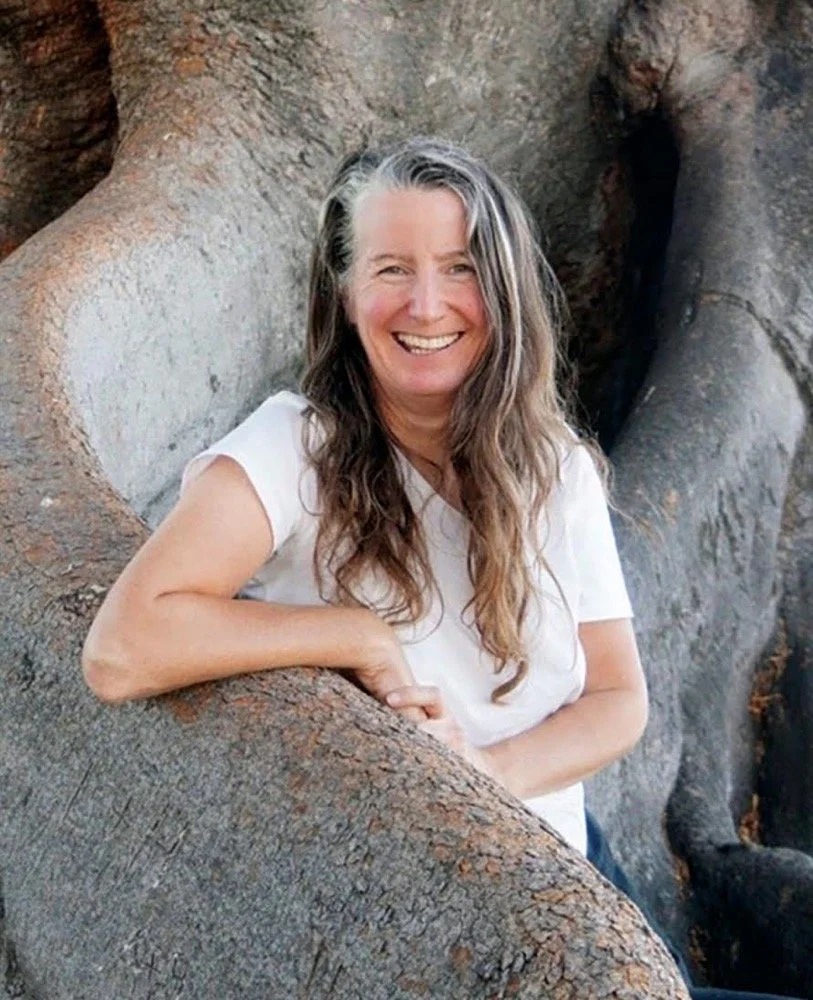
Katie Holten is an artist, activist, and author of the bestselling book, The Language of Trees. She represented Ireland at the 50th Venice Biennale. She has had solo exhibitions at the Bronx Museum, the Nevada Museum of Art, the New Orleans Museum of Art, and the Contemporary Art Museum St. Louis. Her work investigates the entangled relationships between humans and the natural world. She has created Tree Alphabets and a Wildflower Alphabet to share her love of the more-than-human world. She is a contributor to Emergence Magazine and a visiting lecturer at the New School of the Anthropocene. Her work has appeared in The New Yorker, The New York Times, Artforum, and frieze. In 2025, she was commissioned to create a Forest Alphabet for the Helsinki Biennale. If she could be a tree, she would be an Oak.
-
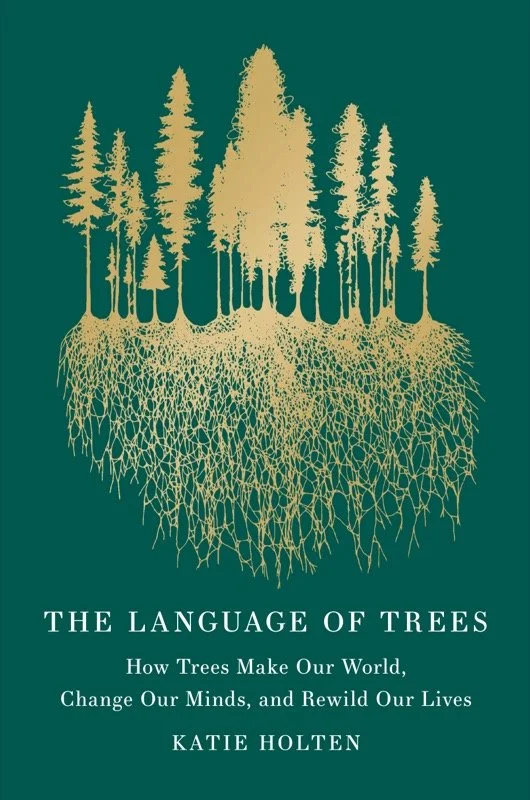
Inspired by forests, trees, leaves, roots, and seeds, The Language of Trees: A Rewilding of Literature and Landscape invites readers to discover an unexpected and imaginative language to better read and write the natural world around us and reclaim our relationship with it.
In this gorgeously illustrated and deeply thoughtful collection, Katie Holten gifts readers her tree alphabet and uses it to masterfully translate and illuminate beloved lost and new, original writing in praise of the natural world. With an introduction from Ross Gay, and featuring writings from over fifty contributors including Ursula K. Le Guin, Ada Limón, Robert Macfarlane, Zadie Smith, Radiohead, Aimee Nezhukumatathil, James Gleick, Elizabeth Kolbert, Plato, and Robin Wall Kimmerer, Holten illustrates each selection with an abiding love and reverence for the magic of trees. She guides readers on a journey from creation myths and cave paintings to the death of a 3,500-year-old cypress tree, from Tree Clocks in Mongolia and forest fragments in the Amazon to the language of fossil poetry, unearthing a new way to see the natural beauty all around us and an urgent reminder of what could happen if we allow it to slip away.
The Language of Trees considers our relationship with literature and landscape, resulting in an astonishing fusion of storytelling and art and a deeply beautiful celebration of trees through the ages.
Christine Kuehn
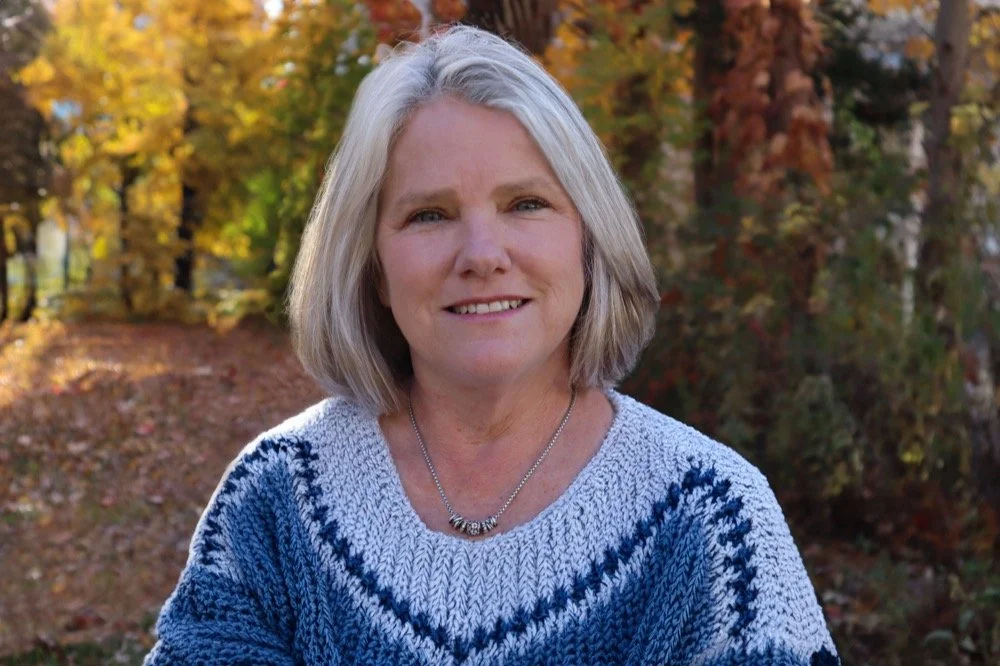
Christine Kuehn was cocooned in the sanctity of a quiet suburban life when, in 1994, a mysterious letter pierced that bubble, sending her on a thirty-year quest to discover the truth behind a horrendous family secret kept hidden for half a century. Following a career in journalism, public relations, and nonprofits, Christine now lives in Maryland with her husband, close to their three grown children.
-
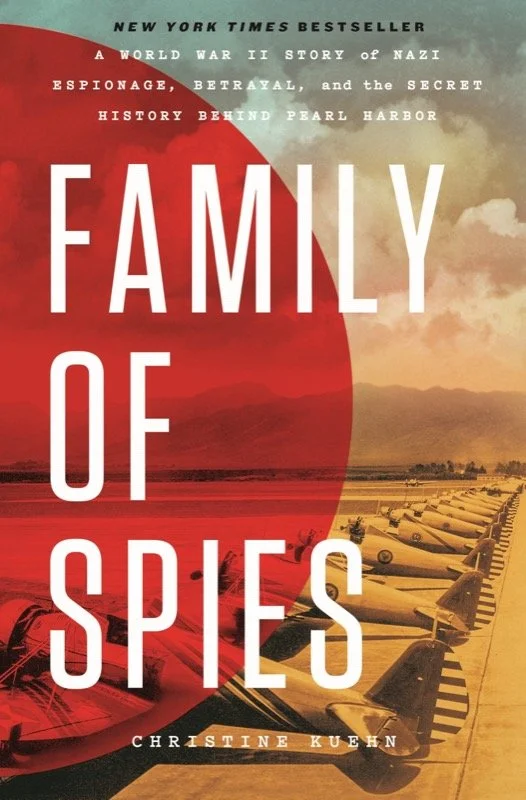
It began with a letter from a screenwriter, asking about a story. Your family. World War II. Nazi spies. Christine Kuehn was shocked and confused. When she asked her seventy-year-old father, Eberhard, what this could possibly be about, he stalled, deflected, demurred, and then wept. He knew this day would come.
The Kuehns, a prominent Berlin family, saw the rise of the Nazis as a way out of the hard times that had befallen them. When the daughter of the family, Eberhard’s sister, Ruth, met Nazi leader Joseph Goebbels at a party, the two hit it off, and they had an affair. But Ruth had a secret―she was half Jewish―and Goebbels found out. Rather than having Ruth killed, Goebbels instead sent the entire Kuehn family to Hawaii, to work as spies half a world away. There, Ruth and her parents established an intricate spy operation from their home, just a few miles down the road from Pearl Harbor, shielding Eberhard from the truth. They passed secrets to the Japanese, leading to the devastating attack on Pearl Harbor. After Eberhard’s father was arrested and tried for his involvement in planning the assault, Eberhard learned the harsh truth about his family and faced a decision that would change the path of the Kuehn family forever.
Jumping back and forth between Christine discovering her family’s secret and the untold past of the spies in Germany, Japan, and Hawaii, Family of Spies is fast-paced history at its finest and will rewrite the narrative of December 7, 1941.
Scott Simon

Scott Simon hosts NPR’s Weekend Edition Saturday and Up First, and is also a special contributor to CBS News Sunday Morning. A winner of Emmy and Peabody awards, he is in the Radio Hall of Fame and the Illinois Lincoln Academy. He lives in Washington, DC, with his wife and two daughters.
-
From the beloved host of NPR’s Weekend Edition Saturday, moving tales of the marvelous animals who have crossed his path.
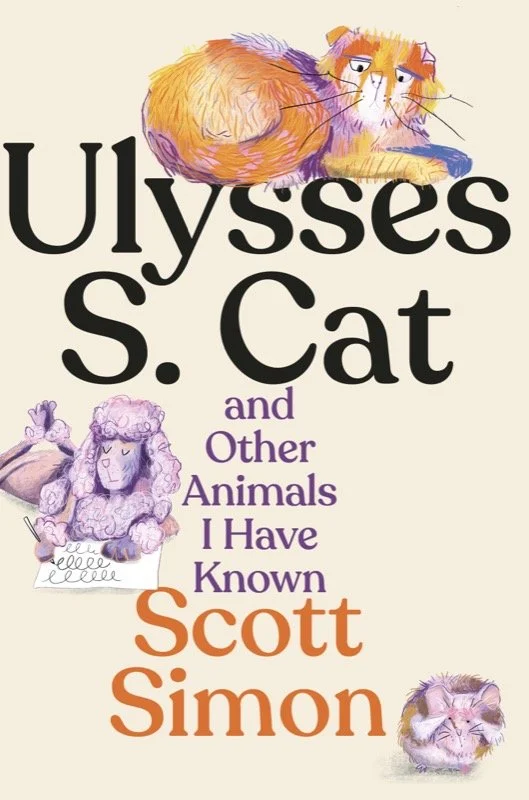
Scott Simon’s household does not make much distinction between humans and other animals. Whether two-legged or four-, flesh-covered, fur-covered, feathered, or gilled—everyone is family. Today, Simon lives with the haiku-writing and absolument charmant French poodle Daisy and the daringly audacious foster cat Gato Blanco. But that’s just the start.
In Ulysses S. Cat and Other Animals I Have Known, Simon warmly philosophizes on the unforgettable and utterly ordinary moments between species, along with their joys, worries, love, and humor. Depicting a lifetime of remarkable, enduring relationships with pets, Simon explores the difficulty of expressing the strong ties we feel: a kinship between humans and animals that’s more familial than “owner,” and more mutual than “caregiver” or “guardian.”
Paired with the charming, whimsical illustrations of renowned New Yorker cartoonist Liana Finck, Simon reflects on how pets unlock our hearts and burrow into our lives beginning with his family’s dog guiding his first steps. From a cat who escaped the British Embassy (Simon had to promise to raise her as British) and street dogs during Sarajevo’s siege to a series of beta fish all named Salman Fishdie and an energetic, cage-escaping hamster Bagel, he reveals how our animals change not just our lives but how we see the world. Enchanting and thoughtful, Ulysses S. Cat is a profusion of exuberant memories and musings on a life spent in animal company.
Earl Swift
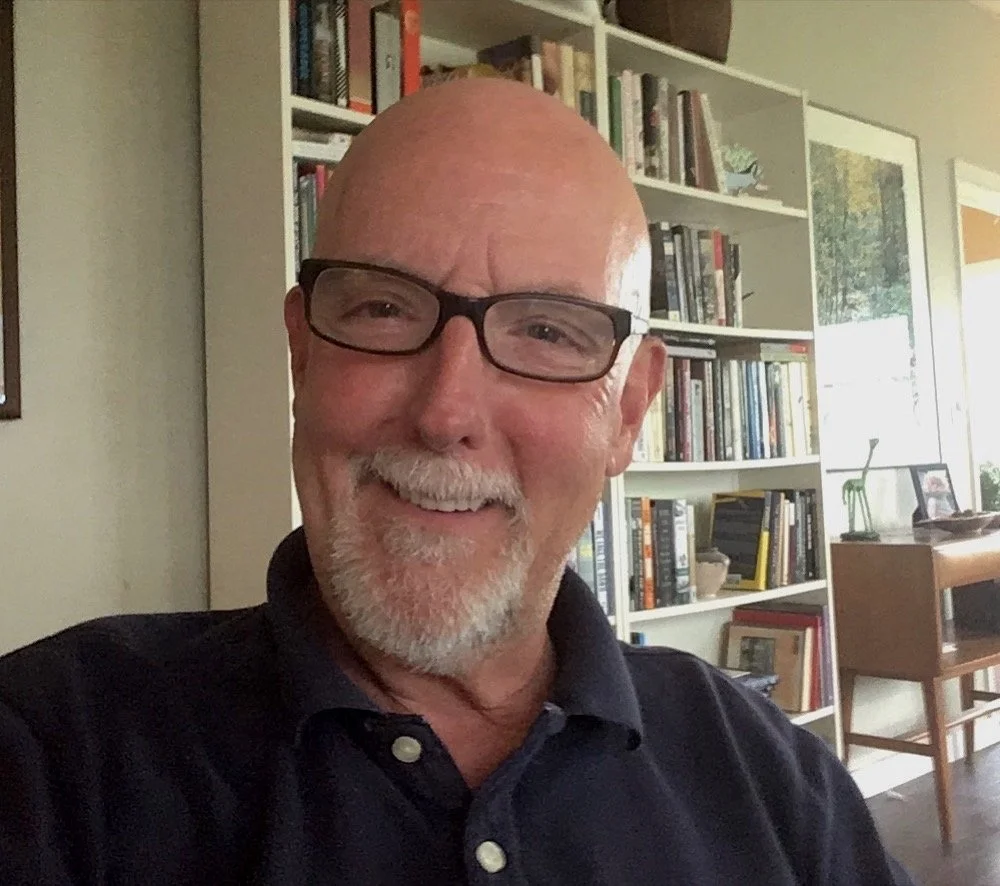
Earl Swift is the author of nine critically acclaimed books and hundreds of major features for newspapers and magazines. His tenth book—Up on Cove Mountain: Adventure, Tragedy, and a Quest for Meaning on the Appalachian Trail—is the product of his two end-to-end hikes on the A.T., and is due for release in August 2026 by HarperCollins. While chasing stories over a forty-year career, Earl has lived for fourteen months on a remote Chesapeake Bay island, camped for weeks in the Laotian jungle, excavated a crashed World War II bomber in Papua New Guinea, made numerous tailhook landings on aircraft carriers, and waded alongside six-foot catfish in the sewers of St. Louis. He’s also circumnavigated the Chesapeake by sea kayak, canoed 435 miles down Virginia’s James River, and survived close encounters with bears, vipers, scorpions, stingrays, foot-long centipedes, and unexploded bombs. He was a Fulbright fellow in New Zealand in 1994 and was a Virginia Humanities fellow at the University of Virginia for ten years, beginning in 2012. He lives in the Blue Ridge Mountains west of Charlottesville.
-
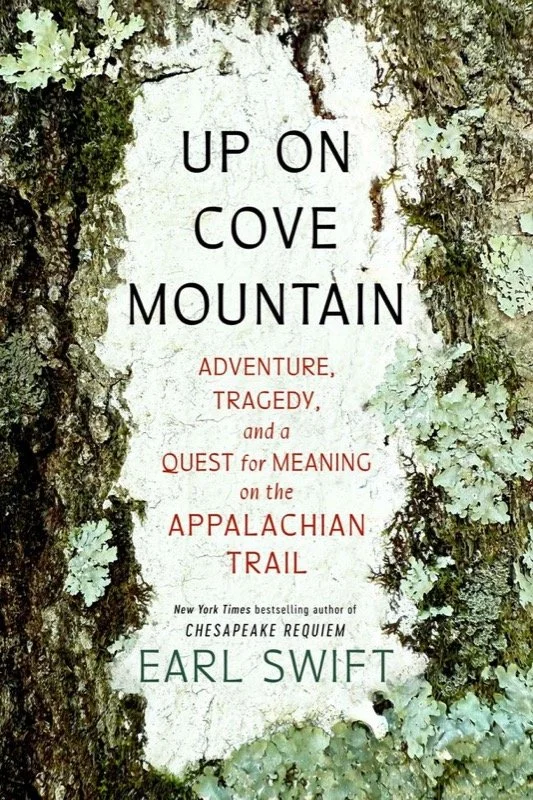
In 1990, a youthful Earl Swift backpacked the Appalachian Trail from Maine to Georgia, a transformative experience that colored every aspect of his later life. He emerged from his hike across the rugged, sky-high roof of fourteen eastern states a sharper and more organized thinker, a better problem solver, and a committed outdoorsman.
But he also left the AT with baggage: Early in his odyssey, he spent time with a couple of other southbounders, who were friendly, capable, and doing everything right, but who were nonetheless murdered weeks later at a mountaintop campsite in Pennsylvania—a fit of violence that the killer never explained.
Half a lifetime later, Swift returned to the trail to find out whether he was still, in his sixties, equal to the AT’s roller-coaster terrain. Driving him, too, was a quest for answers that had nagged at him since that first hike: What had happened at that campsite to turn two smart, bighearted people into prey? Why had fate chosen them, when other hikers—Swift included—seemed more likely candidates? And how could such a grisly episode have unfolded in the backcountry’s sylvan loveliness, not to mention one of the safest places around?
Up on Cove Mountain is the arresting account of Swift’s 2024 trek through the AT’s enduring wonders and the ghosts of its past, a chronicle of swashbuckling adventure coupled with a meditation on the nature of risk and the risks of nature.
Steven Weinberg
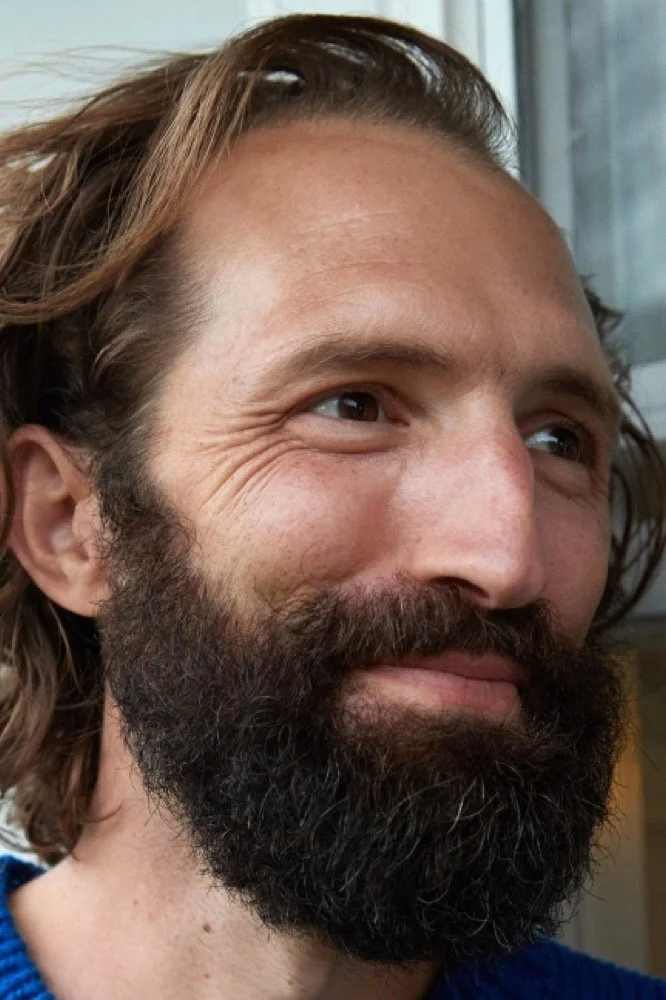
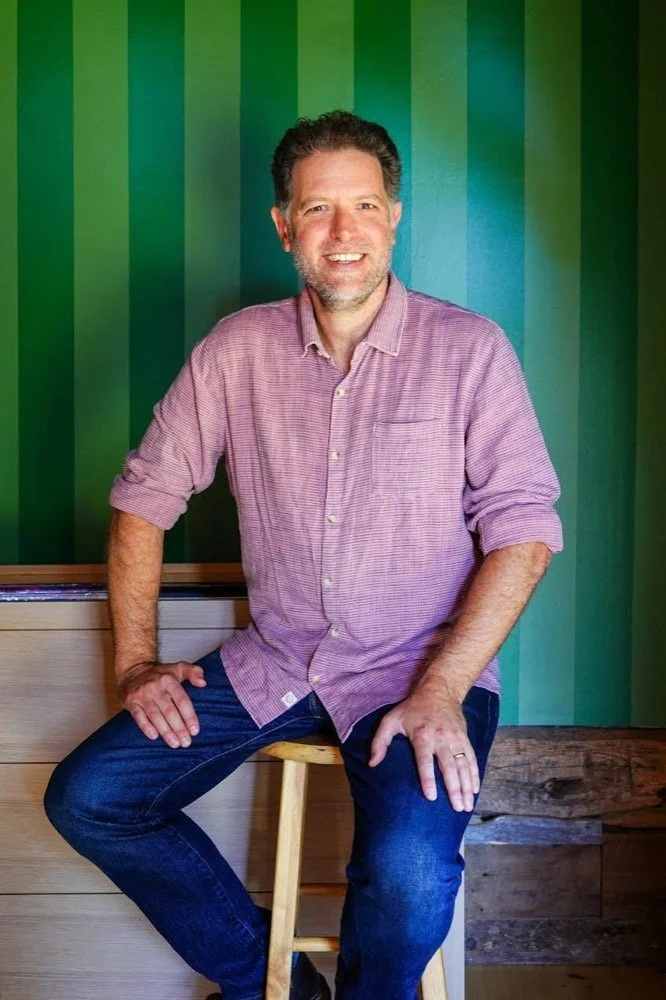
Steven Weinberg is an author and artist whose work has been featured in The New York Times, The Metropolitan Museum of Art, The Smithsonian Institute, as well as on the cover of Thomas McGuane’s Fly Fishing classic The Longest Silence and in Jimmy Kimmel’s fishing hotel, The South Fork Lodge. He’s written and/or illustrated more than fifteen books for kids and adults, including What Is Color?, a critically acclaimed journey into how color is made, The Fly Fishing Book: An Artful Guide to Angling, and I Am The Mountain. Steven and his wife, Casey Scieszka, also own and operate the Spruceton Inn: A Catskills Bed and Bar. Their annual artist residency hosts world-renowned painters, bestselling authors, and Pulitzer Prize and National Book Award finalists. For more of Steven’s work, including original art and prints for sale, find him on his website and on Instagram.
-
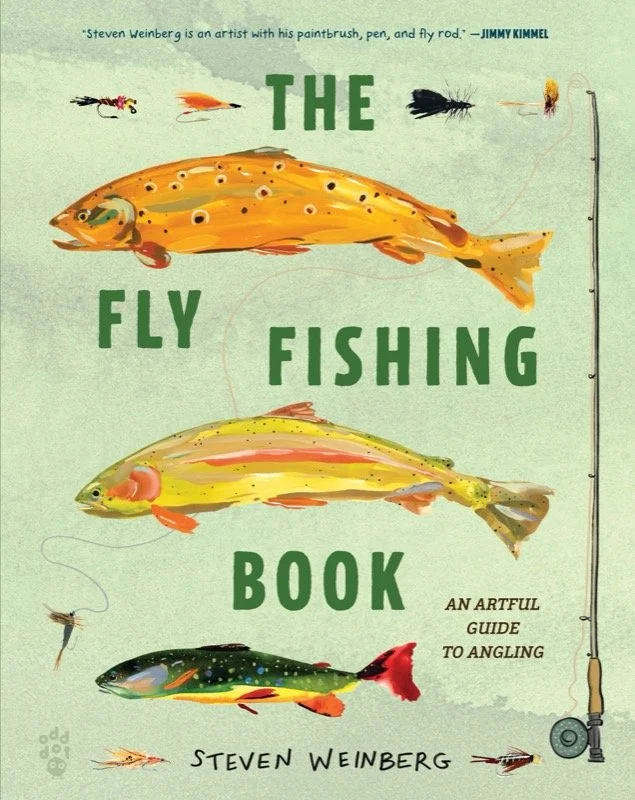
Whether you're a seasoned angler, a curious beginner, or simply someone who appreciates the beauty of the outdoors, THE FLY FISHING BOOK offers a uniquely enriching journey into the world of fly fishing. From the masterful watercolors of artist and angler Steven Weinberg, this book welcomes everyone to the water.
Inside, you'll find:
-Accessible Guidance: Weinberg’s approachable writing demystifies everything from foundational techniques like casting and gear selection to more advanced skills such as reading water and understanding fly selection.
-Stunning Artwork: Immerse yourself in lush paintings that capture the beauty of trout and their natural habitats – artwork admired by enthusiasts and featured in prestigious settings.
-Expert Insights: Benefit from Weinberg's years of experience, alongside interviews with other fly fishing experts.
-More Than Just Fishing: Explore unexpected elements, from understanding insect life cycles to pairing the perfect beer with your catch.
THE FLY FISHING BOOK isn't just an instructional guide; it's a beautiful object that will enhance any coffee table. With its broad appeal and stunning visuals, it's the perfect gift for Father's Day or anyone who appreciates the art and tranquility of fly fishing.